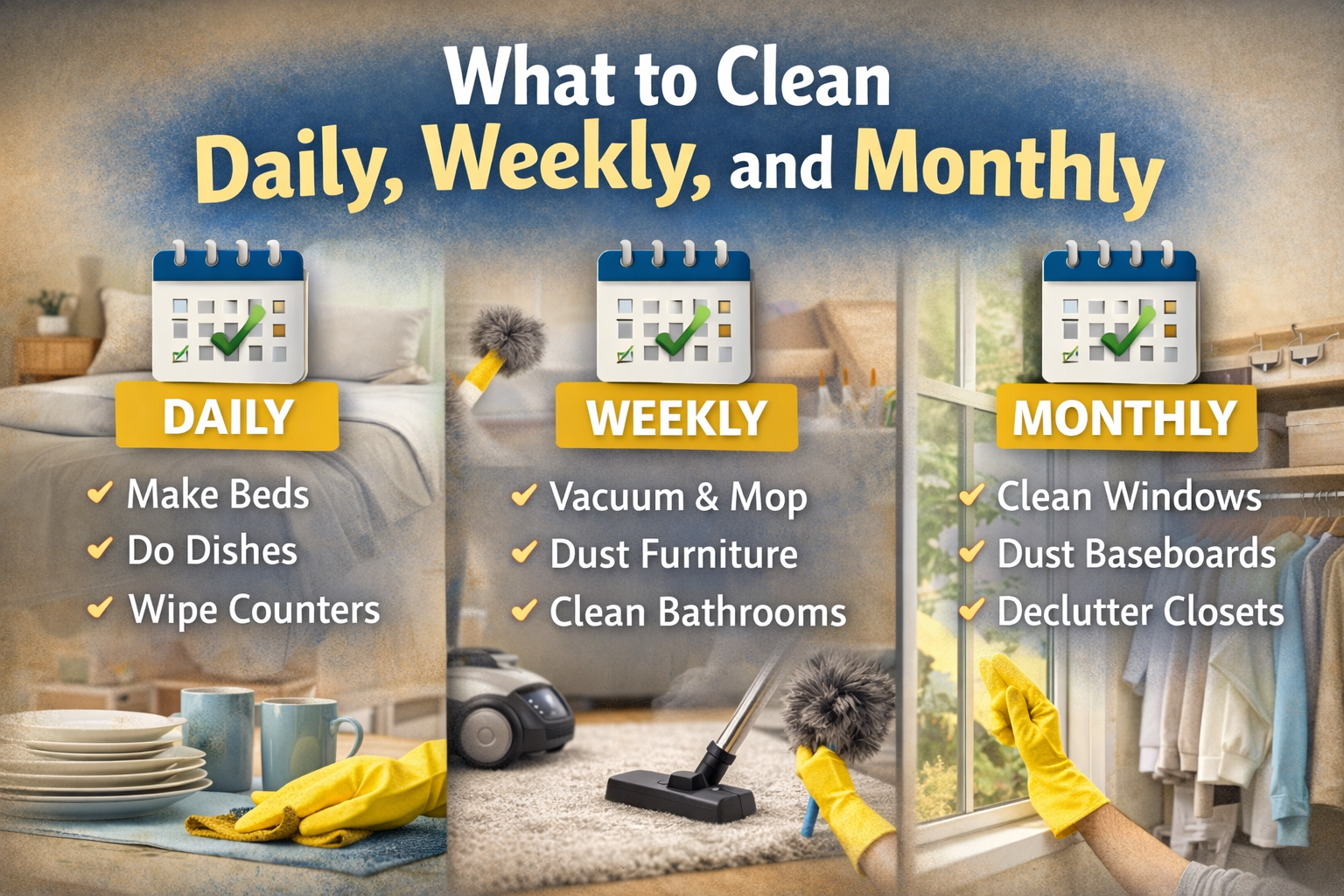
Keeping a home clean doesn’t mean cleaning everything all the time. The key to an organized and manageable routine is knowing what needs attention daily, weekly, and monthly. When cleaning tasks are grouped by frequency, they become easier to manage and far less overwhelming.
At Grandpa’s Cleaning Guide, we focus on simple, realistic cleaning systems that work for real homes and busy schedules. This guide breaks down cleaning tasks into clear time-based categories, helping you maintain a clean home consistently without spending unnecessary hours each week.
Why Cleaning Frequency Matters
Cleaning frequency plays a major role in how clean and comfortable your home feels. Tasks that are done too rarely allow dirt, bacteria, and clutter to build up, while cleaning too often wastes time and energy.
By assigning tasks to daily, weekly, or monthly routines, you prevent buildup before it becomes a problem. This approach reduces the need for frequent deep cleaning, protects surfaces and furniture, and helps you stay in control of your home without stress. A well-balanced cleaning schedule turns cleaning into maintenance rather than constant catch-up.
What to Clean Daily
Daily cleaning focuses on preventing mess from building up. These tasks don’t take much time, but skipping them makes the home feel dirty very quickly. Daily cleaning is about maintenance, not deep cleaning.
Key daily tasks usually include wiping kitchen countertops after use, washing dishes or loading the dishwasher, cleaning the sink, and doing a quick tidy of shared spaces. Making beds, wiping dining tables, and managing trash are also part of a simple daily routine. These small actions keep surfaces hygienic and make weekly cleaning much easier.
What to Clean Weekly
Weekly cleaning handles dirt and buildup that daily tasks don’t fully address. These tasks require a bit more time but help maintain overall cleanliness and comfort.
Weekly tasks typically include vacuuming or sweeping floors, mopping hard surfaces, cleaning bathrooms, dusting furniture and shelves, and changing bed linens. Cleaning mirrors, wiping door handles, and disinfecting frequently touched areas also fit into this category. When done consistently, weekly cleaning prevents grime from turning into stubborn stains or odors.
What to Clean Monthly
Monthly cleaning focuses on areas that don’t need constant attention but still require regular care. Ignoring these tasks can lead to long-term buildup and maintenance issues.
Monthly tasks often include cleaning appliances such as the refrigerator, oven, or microwave, wiping baseboards, cleaning behind and under furniture, washing shower curtains, and checking air filters. This is also a good time to organize cabinets, closets, and storage areas. Monthly cleaning helps reset the home and keeps deeper problems from developing.
How to Adjust the Schedule Based on Your Lifestyle
Not every home follows the same cleaning schedule. Your lifestyle plays a big role in how often certain tasks should be done. Homes with children usually require more frequent surface cleaning, while homes with pets may need extra attention to floors, furniture, and air quality.
Smaller homes are often easier to maintain with lighter daily routines, while larger homes may benefit from spreading tasks across the week. Busy schedules also require flexibility. Adjusting the frequency of tasks based on your daily habits helps you stay consistent without feeling overwhelmed.
Daily Cleaning vs Deep Cleaning Tasks
Daily and weekly cleaning tasks focus on maintenance, while deep cleaning addresses buildup that develops over time. Daily routines keep surfaces tidy and hygienic, but they don’t replace the need for deeper cleaning.
Deep cleaning involves tasks such as cleaning behind appliances, scrubbing grout, washing upholstery, and removing hidden dust. Understanding this difference helps you set realistic expectations. A strong daily and weekly routine reduces how often deep cleaning is needed and makes it far more manageable when the time comes.
Common Mistakes When Creating a Cleaning Schedule
One common mistake is trying to do too much in one day. Overloading a schedule often leads to burnout and inconsistency. Another issue is ignoring monthly tasks, which allows dirt and maintenance problems to build up unnoticed.
Many people also aim for perfection instead of consistency. Skipping a task occasionally is normal, but abandoning the routine entirely is what causes cleaning to feel overwhelming. A simple, flexible schedule that fits your lifestyle is far more effective than an overly strict plan.
Simple Tips to Stick to Your Cleaning Routine
Sticking to a cleaning routine becomes much easier when it fits naturally into your daily life. Start by keeping your schedule simple and realistic instead of trying to clean everything at once. Breaking tasks into small steps makes them easier to complete and less mentally exhausting.
Setting a fixed time for daily or weekly tasks helps build consistency. Using short checklists, timers, or reminders can also keep you on track without pressure. Most importantly, allow flexibility. Missing a task occasionally is normal, but returning to your routine quickly is what keeps your home consistently clean.
Conclusion
Keeping a home clean doesn’t require constant effort or long cleaning sessions. By dividing tasks into daily, weekly, and monthly routines, you create a balanced system that prevents dirt from building up and keeps cleaning manageable.
A simple, consistent schedule turns cleaning into regular maintenance rather than a stressful chore. When used as a reference, this approach helps you stay organized, save time, and maintain a clean and comfortable home with less effort over the long term.
