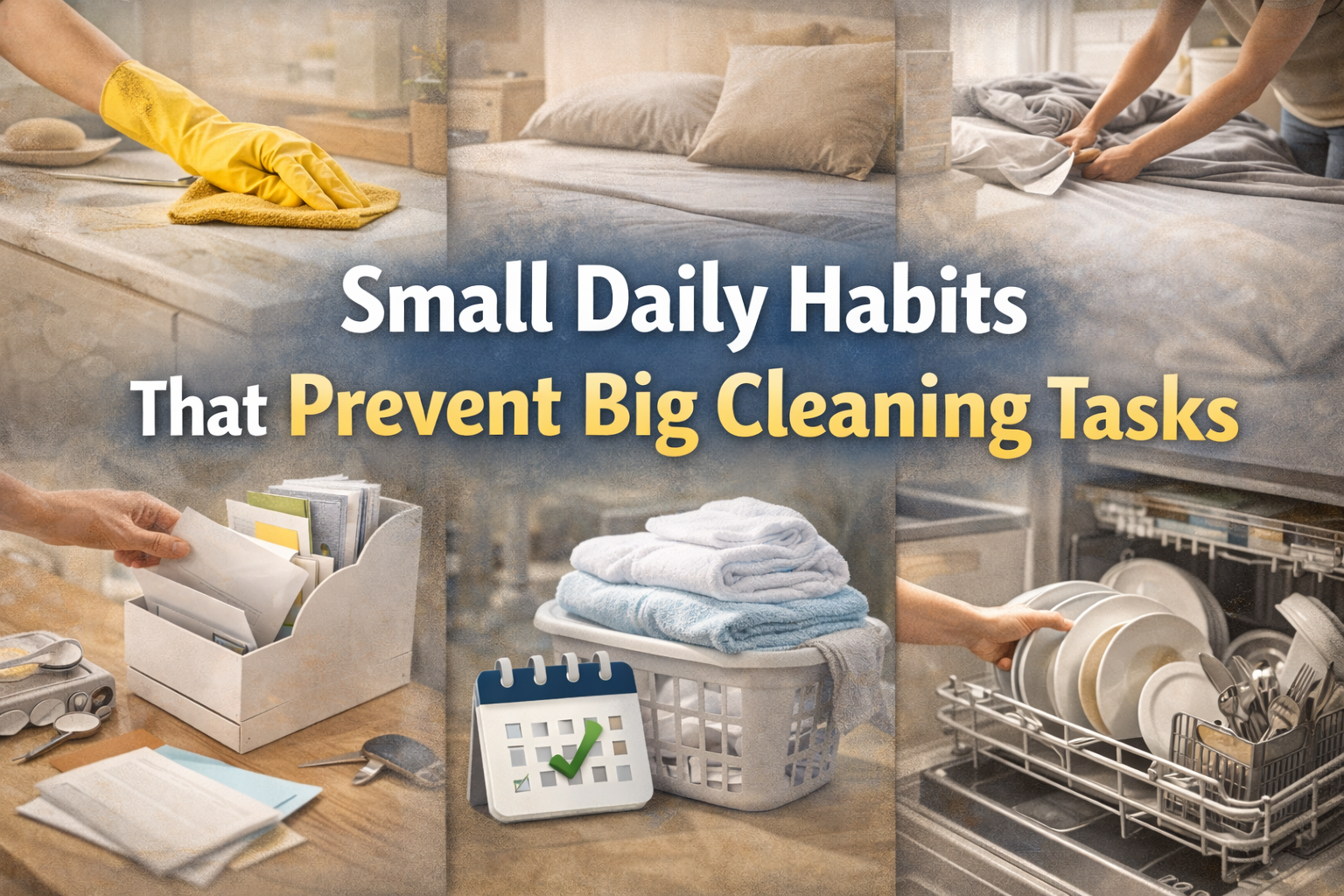
Big cleaning tasks rarely appear overnight. Most of the time, they are the result of small messes that were ignored day after day. Dust builds up slowly, clutter grows one item at a time, and stains become harder to remove when they are left untreated. Over time, these small issues turn into overwhelming cleaning jobs.
The purpose of this article is simple: to show how small daily habits can prevent major cleaning tasks altogether. By focusing on prevention instead of reaction, you can keep your home consistently clean without spending hours scrubbing or relying on frequent deep cleaning sessions.
Why Prevention Is Better Than Deep Cleaning
Deep cleaning is sometimes necessary, but relying on it too often is a sign that daily maintenance is missing. Preventive habits stop dirt, clutter, and buildup before they reach a point where deep cleaning becomes unavoidable.
When you handle small tasks daily, surfaces stay cleaner, floors collect less dust, and stains don’t have time to settle. This reduces physical effort, saves time, and protects furniture and surfaces from long-term damage. Prevention turns cleaning into light maintenance instead of a stressful, time-consuming chore.
1- Clean Messes Immediately
One of the most effective daily habits is cleaning messes as soon as they happen. Fresh spills, crumbs, and splashes are easy to remove and usually require nothing more than a quick wipe. When ignored, the same mess can dry out, stain surfaces, and require strong cleaners or extra scrubbing later.
Cleaning immediately also keeps your home feeling under control. Small actions like wiping a countertop after cooking or drying a sink after use prevent buildup and reduce the number of tasks that pile up at the end of the day. Over time, this habit alone can significantly reduce the need for heavy cleaning.
2- Put Things Back After Use
Clutter is one of the main reasons cleaning feels harder than it should. When items are left on tables, counters, or chairs, cleaning turns into a constant process of moving things instead of actually removing dirt. Over time, this creates visual noise that makes a space feel messy even if it has been recently cleaned.
Putting items back in their proper place after use prevents clutter from forming in the first place. This habit keeps surfaces clear, speeds up daily cleaning, and makes weekly routines much easier. It also reduces the mental load of cleaning, because there are fewer decisions to make when everything already has a place.
3- Make the Bed Every Morning
Making the bed is a small habit with a strong impact on how clean a bedroom feels. A made bed instantly creates a sense of order and discourages clothes, bags, or other items from piling up on it throughout the day.
This habit also sets the tone for the rest of the room. When the largest surface in the bedroom looks organized, the entire space feels more controlled and easier to maintain. Over time, making the bed daily reduces clutter and helps keep the bedroom tidy with minimal effort.
4- Wipe Kitchen Surfaces Daily
The kitchen is one of the fastest areas to collect dirt, grease, and food residue. Daily use means mess appears quickly, and ignoring it allows buildup to harden and spread. Wiping kitchen surfaces daily prevents this buildup and keeps the space hygienic.
A quick wipe of countertops, stovetops, and sinks after cooking takes only a few minutes but saves significant effort later. This habit reduces the need for heavy scrubbing, helps control odors, and keeps the kitchen feeling clean throughout the day.
5- Manage Dishes Every Day
Leaving dishes in the sink is one of the fastest ways for a kitchen to feel out of control. Food residue dries quickly, unpleasant odors develop, and bacteria have more time to grow. What starts as a few plates can easily turn into a stressful cleaning task by the end of the day.
Managing dishes daily keeps the kitchen functional and hygienic. Washing dishes after meals or loading the dishwasher regularly prevents buildup and keeps surfaces clear. This habit also makes it easier to maintain other kitchen areas, since a clean sink encourages quick wiping and better overall organization.
6- Take Out Trash Before It Becomes a Problem
Trash does not need to be full to cause issues. Food waste, packaging, and moisture can create odors long before the bag overflows. When trash is ignored, leaks and spills become more likely, leading to extra cleaning work.
Taking out trash regularly keeps the home smelling fresh and prevents messes that require deeper cleaning. This simple habit also discourages pests and reduces the need to clean trash bins frequently. A small daily check of the trash can prevent bigger problems later.
7- Do a Quick Daily Tidy
A short daily tidy is one of the most effective habits for preventing major cleaning sessions. Spending just a few minutes picking up items, clearing surfaces, and returning things to their place keeps clutter from spreading across the home.
This habit works best when it becomes part of a routine, such as tidying shared spaces in the evening. A quick daily tidy keeps rooms looking organized and reduces the time needed for weekly or monthly cleaning. Over time, it turns cleaning into maintenance rather than a constant reset.
8- Clean High-Traffic Areas Regularly
High-traffic areas collect dirt faster than any other part of the home. Entryways, hallways, and kitchen floors are exposed to constant movement, which brings in dust, debris, and outdoor dirt. When these areas are ignored, dirt spreads easily to the rest of the house.
Cleaning high-traffic areas regularly prevents this spread. A quick sweep or vacuum in these spaces keeps floors cleaner overall and reduces how often deeper floor cleaning is needed. This habit also helps protect flooring from long-term wear caused by trapped dirt and grit.
9- Ventilate Your Home Daily
Poor air circulation can make even a clean home feel stale and uncomfortable. Moisture, odors, and airborne dust build up when fresh air is not allowed to circulate, especially in kitchens, bathrooms, and bedrooms.
Opening windows daily, even for a short time, helps reset the indoor environment. Fresh air reduces lingering smells, controls humidity, and improves how clean a space feels. Ventilation is a simple habit that supports both cleanliness and comfort without any physical cleaning effort.
10- Clean As You Move Through the House
Cleaning does not always need to be a separate task. Small actions taken while moving through the house can prevent buildup without adding extra work. Wiping a bathroom sink after use, drying shower walls, or cleaning a mirror quickly keeps these areas from developing stubborn residue.
This habit works because it stops mess at the source. Instead of waiting for dirt to accumulate, cleaning as you go maintains surfaces with minimal effort. Over time, it reduces the need for intensive cleaning sessions and keeps the home consistently presentable.
11- Stay on Top of Laundry
Laundry piles grow faster than most people expect. When clothes are left on chairs, beds, or floors, they quickly create visual clutter and make rooms feel messy, even if everything else is clean. Large piles also make laundry feel more exhausting and time-consuming.
Handling laundry regularly prevents this buildup. Smaller, frequent loads are easier to manage and keep clothes from spreading throughout the house. This habit helps bedrooms and living areas stay organized and reduces the need for long sorting and folding sessions later.
12- Control Dirt at the Entryway
A significant amount of dirt enters the home through shoes and foot traffic. Entryways are often overlooked, yet they play a major role in how clean the rest of the house stays. When dirt is tracked inside, it spreads quickly to floors, carpets, and furniture.
Simple habits like removing shoes at the door, using doormats, and cleaning entryway floors regularly can dramatically reduce indoor dirt. Controlling mess at the source keeps the rest of the home cleaner and lowers how often floors need deep cleaning.
13- Handle Paper and Small Clutter Daily
Paper clutter builds up quietly through mail, receipts, packaging, and notes. When left unmanaged, these small items spread across tables and counters, creating visual chaos that makes spaces feel dirty and disorganized.
Sorting paper daily prevents piles from forming. Discarding unnecessary items immediately and storing important documents in a designated place keeps surfaces clear. This habit reduces visual clutter and makes cleaning faster and more effective.
14- Wipe High-Touch Areas Often
High-touch areas collect dirt and germs faster than most people realize. Door handles, light switches, remote controls, cabinet handles, and phone screens are touched many times throughout the day, yet they are easy to forget during regular cleaning.
Wiping these areas often prevents buildup that can make a home feel dirty even after cleaning. This habit improves hygiene and instantly improves the overall feeling of cleanliness, especially in shared spaces.
15- Keep Cleaning Tools Easy to Reach
Daily cleaning habits are easier to maintain when cleaning tools are accessible. When wipes, cloths, or small tools are stored far away, small messes are more likely to be ignored and left for later.
Keeping basic cleaning supplies within reach encourages quick action. Easy access turns cleaning into a natural response instead of a planned task, helping prevent small messes from turning into bigger cleaning jobs.
The Long-Term Impact of Small Daily Habits
Small habits may seem insignificant on their own, but their long-term impact is powerful. When daily routines are followed consistently, dirt has less time to build up, clutter stays under control, and cleaning feels lighter and less stressful.
Over time, these habits reduce how often deep cleaning is needed and make the home easier to maintain. Instead of reacting to mess, you stay ahead of it, which saves time, energy, and effort.
Conclusion
Big cleaning tasks are rarely the result of a single problem. They usually grow from small daily habits that were skipped or ignored. By focusing on prevention rather than reaction, you can stop mess from building up before it becomes overwhelming.
Small daily habits create a home that stays cleaner with less effort. When cleaning becomes part of everyday life instead of an occasional reset, maintaining a clean and comfortable home feels natural, manageable, and far less exhausting.
