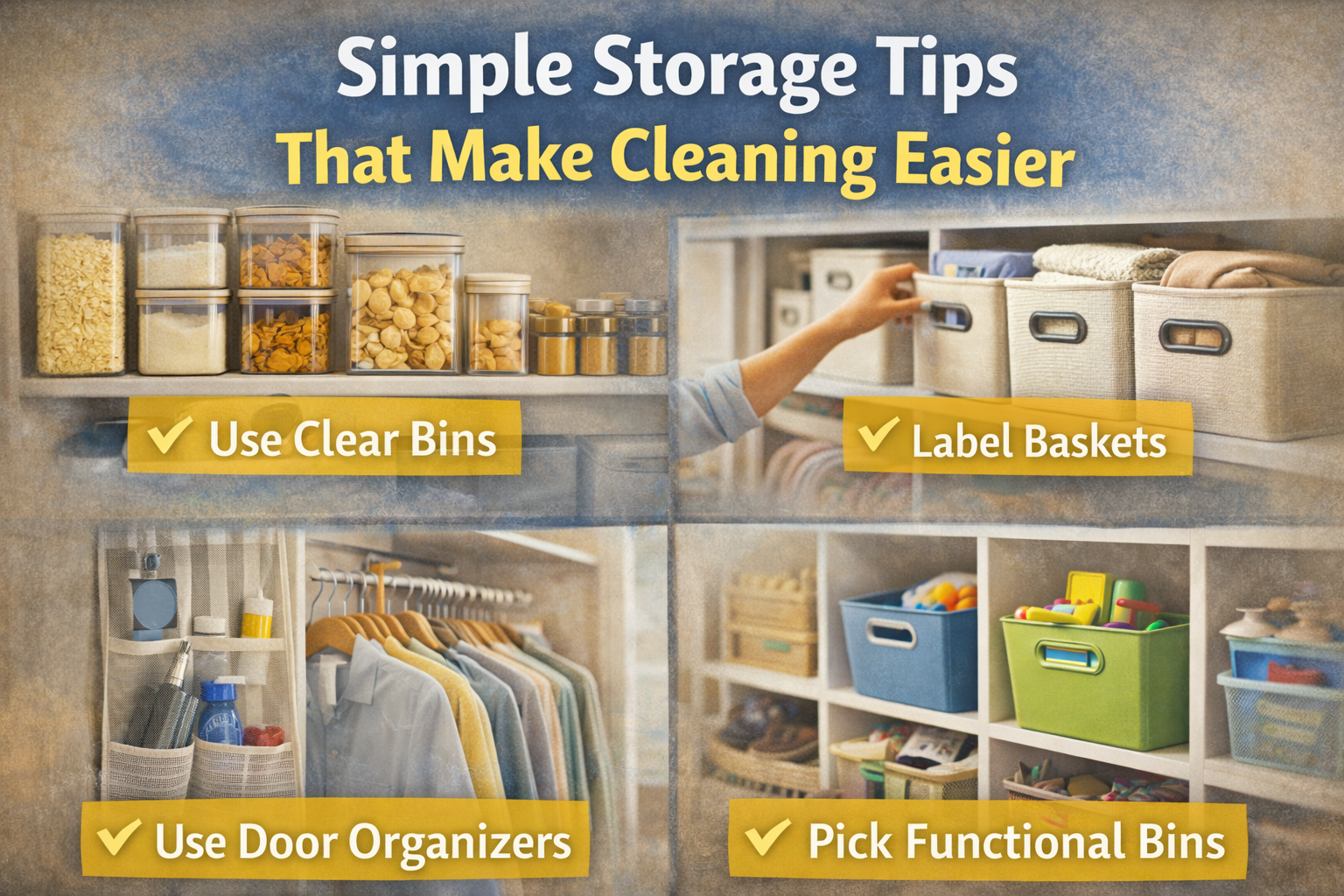
Many cleaning problems don’t come from dirt itself, but from poor storage. When items don’t have clear places, clutter builds up quickly, surfaces stay crowded, and cleaning becomes a repetitive and frustrating task. No matter how often you clean, a home with bad storage will never feel fully organized.
Smart storage is not about buying expensive organizers or creating perfect-looking spaces. It’s about setting up simple systems that make daily life easier. When storage works with your habits instead of against them, cleaning becomes faster, simpler, and far less frequent.
Why Good Storage Reduces Cleaning Effort
Good storage directly affects how easy it is to clean your home. When items are stored properly, there is less clutter on floors and surfaces, which means fewer obstacles when wiping, vacuuming, or tidying up.
Clutter forces you to move items before you can clean, doubling the effort. Clear storage systems reduce this problem by keeping things off visible surfaces. The result is faster daily cleaning and less need for deep resets.
Declutter Before You Organize
No storage system can work if you are trying to organize too many things. Decluttering is the foundation of effective storage. Keeping items you rarely use only makes cleaning harder and storage more crowded.
Before organizing, remove items that are broken, unused, or no longer needed. This step reduces the number of things you need to store and maintain. Fewer items mean less dust, less clutter, and less time spent cleaning.
Use Open Storage for Everyday Items
Open storage works best for items you use daily. Baskets, open bins, and shelves allow you to grab and return items quickly without opening drawers or doors.
When storage is visible and accessible, items are more likely to be put away properly. This reduces the chance of things being left on counters or floors, making daily tidying faster and more natural.
Assign a “Home” for Every Item
One of the main causes of clutter is not knowing where things belong. When items don’t have a clear home, they end up being placed wherever there is space.
Assigning a specific place for each item eliminates this problem. When everything has a defined location, putting things away becomes automatic. This habit keeps surfaces clear and makes cleaning more efficient.
Store Items Where You Use Them
Storage should match how you actually use your home. Storing items far from where they are used creates unnecessary movement and encourages clutter.
For example, cleaning supplies should be near the areas they are used most. Kitchen tools belong close to cooking areas, and bathroom essentials should stay within reach. This approach reduces effort and keeps items from being left out after use.
Limit Flat Surfaces
Flat surfaces such as tables, counters, and dressers easily turn into clutter zones. When too many items are placed on these surfaces, cleaning becomes harder and rooms feel messy even when clean.
Limiting what stays on flat surfaces helps maintain a clean look. Store items vertically or inside containers whenever possible. Clear surfaces are easier to wipe and instantly make a room feel more organized.
Use Vertical Space Wisely
Vertical storage is one of the most effective ways to reduce clutter. Walls, doors, and tall shelving units provide valuable storage without taking up floor space.
Hooks, wall shelves, and over-the-door organizers keep items off the floor and surfaces. Using vertical space makes rooms feel larger and simplifies cleaning by reducing obstacles.
Keep Cleaning Supplies Easy to Access
Cleaning is easier when tools are within reach. If supplies are hard to access, small messes are more likely to be ignored.
Store basic cleaning tools in convenient locations, such as under sinks or in utility closets near high-use areas. Easy access encourages quick cleaning and prevents dirt from building up.
Rotate Seasonal Items
Keeping seasonal items stored year-round creates unnecessary clutter. Clothing, shoes, and equipment that are not in use take up space and collect dust.
Rotating items based on the season frees up storage and keeps frequently used areas organized. This system also reduces the need for frequent reorganizing and deep cleaning.
Use Clear or Labeled Containers
Clear containers or labeled boxes make storage more efficient. Being able to see or quickly identify what’s inside prevents unnecessary searching and mess.
This approach keeps items organized and makes it easier to maintain order over time. It also reduces the chance of items being left out because they are hard to find.
Create Drop Zones for Daily Items
Daily-use items such as keys, bags, mail, and wallets often create clutter near entrances. Without designated spots, these items spread across surfaces.
Creating simple drop zones keeps daily items contained. Hooks, trays, or small baskets near entryways prevent clutter from spreading and make daily routines smoother.
Avoid Over-Organizing
Over-organizing can make storage systems hard to maintain. Complicated systems with too many categories or containers often fail in real life.
Simple storage works best. Focus on easy-to-use systems that match daily habits. A flexible setup is more effective than a perfect one that is hard to maintain.
How Storage Affects Long-Term Maintenance
Good storage reduces the need for frequent reorganization and deep cleaning. When items are stored properly, dirt has fewer places to hide, and cleaning becomes faster.
Over time, smart storage systems create a home that is easier to maintain. Cleaning feels lighter, and clutter becomes easier to control before it turns into a problem.
Conclusion
Storage is one of the most powerful tools for making cleaning easier. When items have clear places and clutter is controlled, cleaning becomes faster and less stressful.
You don’t need to change everything at once. Start with one area, apply a simple storage rule, and build from there. Smart storage turns cleaning from a constant task into a manageable routine.
