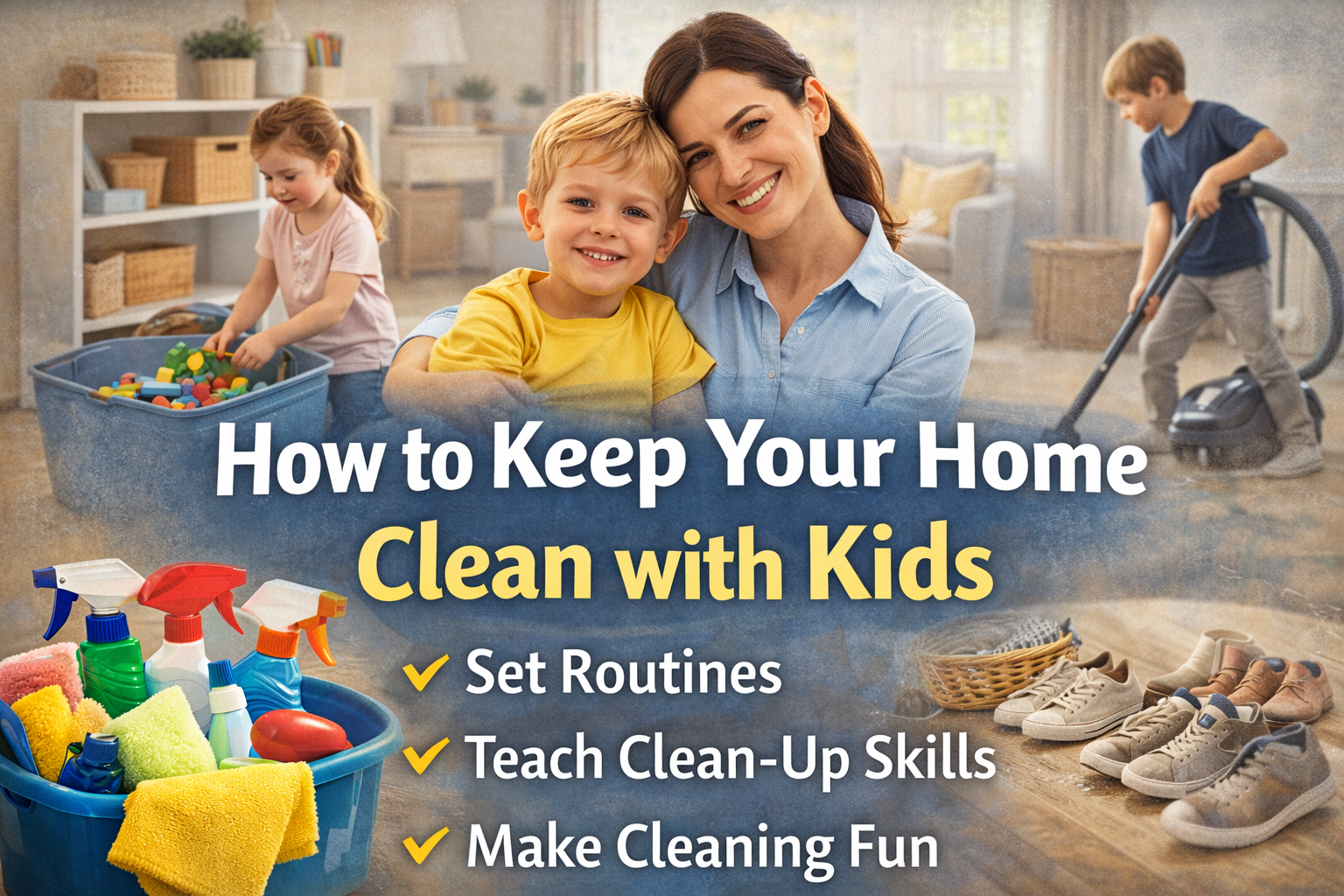
Keeping a home clean with kids can feel like an endless challenge. Toys appear everywhere, crumbs spread quickly, and mess seems to return moments after you clean. Many parents feel frustrated because traditional cleaning advice doesn’t always work in homes with children.
The goal is not perfection, but balance. A clean home with kids should be safe, comfortable, and manageable—not spotless at all times. This guide focuses on practical strategies that help families maintain order without turning cleaning into a constant source of stress.
Why Cleaning with Kids Is Different
Homes with children function differently from adult-only households. Kids play, explore, eat, and move constantly, which naturally creates more mess. Floors get dirty faster, surfaces are touched more often, and clutter builds up throughout the day.
Because of this, cleaning routines designed for quiet or low-traffic homes often fail with kids. Successful cleaning with children requires flexible systems, realistic expectations, and routines that adapt to daily activity instead of fighting against it.
Set Realistic Expectations
One of the biggest challenges for parents is expecting their home to stay perfectly clean all the time. With kids, mess is part of daily life, and trying to eliminate it completely leads to frustration and burnout.
Setting realistic expectations means focusing on what truly matters. Clean floors, safe surfaces, and organized spaces are more important than constant tidiness. Accepting a certain level of mess allows parents to maintain a healthier relationship with cleaning while still keeping the home under control.
Create Simple Cleaning Rules for Kids
Children respond better to clear, simple rules than long instructions. Creating a few basic cleaning rules helps kids understand what is expected without feeling overwhelmed. These rules should be easy to remember and consistent, such as putting toys away after playing or wiping spills right away.
When rules are simple and repeated daily, they become part of the routine. This approach reduces daily mess and teaches kids responsibility without turning cleaning into a constant argument.
Assign Age-Appropriate Cleaning Tasks
Giving kids cleaning tasks that match their age helps them feel involved rather than forced. Younger children can help with small tasks like putting toys in a box or placing clothes in a laundry basket, while older kids can handle slightly more responsibility.
Age-appropriate tasks build independence and reduce the workload for parents. Over time, these small responsibilities become habits that help keep the home organized without extra effort.
Control Mess at the Source
Preventing mess is easier than cleaning it later. Identifying where mess usually starts—such as play areas, eating spaces, and entryways—helps limit how far it spreads.
Using designated zones for activities keeps mess contained. When toys stay in play areas and food stays in dining spaces, cleaning becomes faster and more manageable for the whole family.
Daily Habits That Make the Biggest Difference
Small daily habits have a big impact in homes with kids. Quick routines like a short tidy after playtime, wiping surfaces after meals, and handling spills immediately help prevent mess from spreading.
These habits don’t need to be perfect to work. Consistency matters more than effort. When daily routines are repeated, the home stays manageable even on busy days.
Smart Storage Solutions for Families
Storage plays a major role in keeping a home clean with kids. Easy-to-reach storage encourages children to put things away on their own. Open bins, labeled boxes, and low shelves make organization simple and accessible.
Limiting how many toys are available at once also helps reduce clutter. Rotating toys instead of displaying everything keeps spaces cleaner and makes cleanup faster.
Keep Floors Under Control
Floors take the biggest hit in homes with children. Crumbs, dirt, and toys quickly spread across walking areas, making rooms feel messy even when surfaces are clean.
Regular sweeping or vacuuming, especially in high-traffic areas, keeps floors manageable. Simple habits like removing shoes indoors also reduce how much dirt enters the home.
Choose Kid-Friendly Cleaning Products
Safety is a top priority in homes with kids. Choosing kid-friendly cleaning products helps protect children from harsh chemicals while still keeping the home clean. Products with mild ingredients and clear safety labels are better suited for family environments.
Storing cleaning products out of reach is just as important as choosing safe ones. When kids see cleaning as a normal part of daily life but not something they can access freely, it creates a safer and more controlled environment.
Make Cleaning Part of the Daily Routine
Cleaning becomes easier when it is built into the daily routine instead of treated as a separate task. Linking cleanup time to existing routines, such as after meals or before bedtime, makes it predictable and easier for kids to follow.
When cleaning happens at the same time each day, children know what to expect. This reduces resistance and helps turn cleaning into a normal habit rather than a punishment or interruption.
Handle Toys and Clutter Efficiently
Toys are often the biggest source of clutter in homes with kids. Without a simple system, toys spread quickly and become difficult to manage. Handling toys efficiently means keeping rules simple and cleanup fast.
Using collection bins, limiting the number of toys out at once, and encouraging kids to clean one area before moving to another helps keep clutter under control. These small systems prevent toy mess from taking over the entire home.
When to Accept the Mess
In homes with kids, mess is not always a problem that needs to be fixed immediately. There are moments when play, creativity, or family time matters more than having everything perfectly tidy. Trying to clean constantly can create stress for both parents and children.
Accepting a certain level of mess helps maintain a healthier balance. The goal is not a spotless home, but a safe and comfortable one. Knowing when to let go and when to clean makes it easier to enjoy daily life without feeling overwhelmed by constant cleanup.
Conclusion
Keeping a home clean with kids is about creating systems that work with daily life, not against it. Simple rules, realistic expectations, and consistent routines make a noticeable difference over time.
By focusing on prevention and involving kids in age-appropriate ways, families can maintain a home that feels organized, safe, and welcoming. A clean home with kids is not perfect, but it is manageable, balanced, and lived in.
